Showing posts with label civil rights campaigners. Show all posts

Wednesday, 7 June 2023

Sorry seems to be the hardest word

I'm re-posting this from the venerable Peter Tatchell, just because it is big news worth re-posting:

The Metropolitan Police Commissioner, Sir Mark Rowley, has said “sorry” to the LGBT+ community for his force’s past homophobic persecution. He’s the first UK police chief to apologise.

In a personal letter to human rights campaigner Peter Tatchell, which was read out in the House of Lords, at today’s launch of the #ApologiseNow campaign, Sir Mark wrote:

“The Met has had systems and processes in place which have led to bias and discrimination in the way we have policed London’s communities, and in the way we have treated our officers and staff, over many decades. Recent cases of appalling behaviour by some officers have revealed that there are still racists, misogynists, homophobes and transphobes in the organisation, and we have already doubled down on rooting out those who corrupt and abuse their position.”

Sir Mark concluded; “I am clear that there is much for us to do. I am sorry to all of the communities we have let down for the failings of the past and look forward to building a new Met for London, one all Londoners can be proud of and in which they can have confidence.”

LGBT+ rights campaigner Peter Tatchell, who led negotiations for the Met’s apology, said:

“We thank Sir Mark Rowley for being the first UK police chief to say sorry. His apology is a ground-breaking step forward that will, we hope, spur other police forces to follow suit. It draws a line under past Met persecution. This will help strengthen LGBT+ trust and confidence in the police; encouraging more LGBTs to report hate crime, domestic violence and sexual assault.”

The launch of the #ApologiseNow campaign, which is bidding to secure apologies from all UK Chief Constables, was hosted by Baroness Helena Kennedy KC and featured a video by the late TV star Paul O’Grady, recorded before his death. In it, Paul urged the police to say sorry for the often abusive, and sometimes illegal, way they treated LGBT+ people

Paul O’Grady backed the apology campaign based on his personal experience of police victimisation. He was present during a police raid on the gay bar, the Royal Vauxhall Tavern in London, on 24 January 1987. He described the raid as “homophobic…we were being treated like animals.”

The launch event heard testimony from LGBTs who were insulted and assaulted by the police. We heard from campaigner Alan Shea about homophobic police persecution on the Isle of Man, and the successful 2022 campaign to get the island’s Chief Constable to say sorry – the first police chief in the British Isles to do so.

Other police services across the UK are currently engaging with the #ApologiseNow campaign, but as discussions are at an early stage we will not be naming them.

“We are not asking the police to apologise for enforcing the law, but to apologise for the often illegal and abusive way they enforced it,” said Peter Tatchell, Director of the Peter Tatchell Foundation.

“Officers raided gay bars, clubs and even private birthday parties, insulting LGBTs as ‘poofs’ and ‘queers’. They gave the names and addresses of arrested gay men to local papers, which led to some being evicted, sacked and violently beaten. Police harassed LGBTs leaving gay venues and arrested same-sex couples for kissing, cuddling and holding hands, right up until the 1990s.

“The police did not make the law but they chose to enforce it in ways that today would be deemed illegal and unacceptable. They went out of their way to target gay and bisexual men to boost their arrest figures and ‘crime fighting’ reputation. Young handsome male officers were sent into public toilets and parks, where they lured gay men into committing offences and then arrested them. These so-called ‘pretty police’ acted as agents provocateurs.

“The yearly average of homosexual offences recorded by the police in England and Wales was nearly three times greater after the partial decriminalisation of male homosexuality in 1967, than it was in the previous eight decades of total criminalisation – clear evidence of a police witch-hunt.

“Police forces in New York, Copenhagen, Sydney, Berlin, Amsterdam, Montreal and San Francisco have apologised, as has the Chief Constable of the Isle of Man. UK police should do the same,”
said Mr Tatchell.

Paul O’Grady’s account of the police raid on the Royal Vauxhall Tavern on 24 January 1987:
“Police have apologised all around the world for their behaviour all those years ago. I think it is about time the British police did the same thing and said we are so sorry for what happened, because it was unnecessary. It was homophobic,” said Mr O’Grady

“I’d only been there for about ten minutes and a copper burst in the dressing room. I thought he was a stripper. He was so rude and so aggressive. And when I came out on the stage, they were all wearing rubber gloves. I said: ‘Oh good, have you come to do the washing up?’ There was pandemonium and people were scared.

“I was called a lascivious act in the South London Press and to tell you the truth I was delighted about that.

“Past injustices often cross my mind and this is one of them. The bloody cheek of them. It was disgusting, it was just offensive. We were being treated like animals. Pure homophobia that’s what it was. And nothing else will make me change my mind. So apologise, because I know where you are!”
said Mr O’Grady.

Peter Tatchell added: “In the 1980s, we had the Chief Constable of Greater Manchester, James Anderton, saying that gay people were ‘swirling round in a cesspit of their own making.’ He gave a green light for the police across the country to persecute our community.

“At the height of this persecution in 1989, there were 1,718 convictions and cautions for so-called ‘gross indecency’ between men – almost as many as in 1954-55 when male homosexuality was totally illegal, and the country was gripped by a McCarthyite-style anti-gay witch hunt.

“If the police say they have changed, they need to show it by acknowledging past wrongs. They need to follow the lead of the Met Police Commissioner. All Chief Constables should apologise for the many decades of past police harassment. Apologise now!”

The #ApologiseNow petition is now live at ApologiseNow.com

Tuesday, 25 April 2023

Wild about Harry

They're dropping like flies at the moment...

Paul O'Grady, Murray Melvin, Dame Mary Quant, Barry Humphries, Len Goodman...

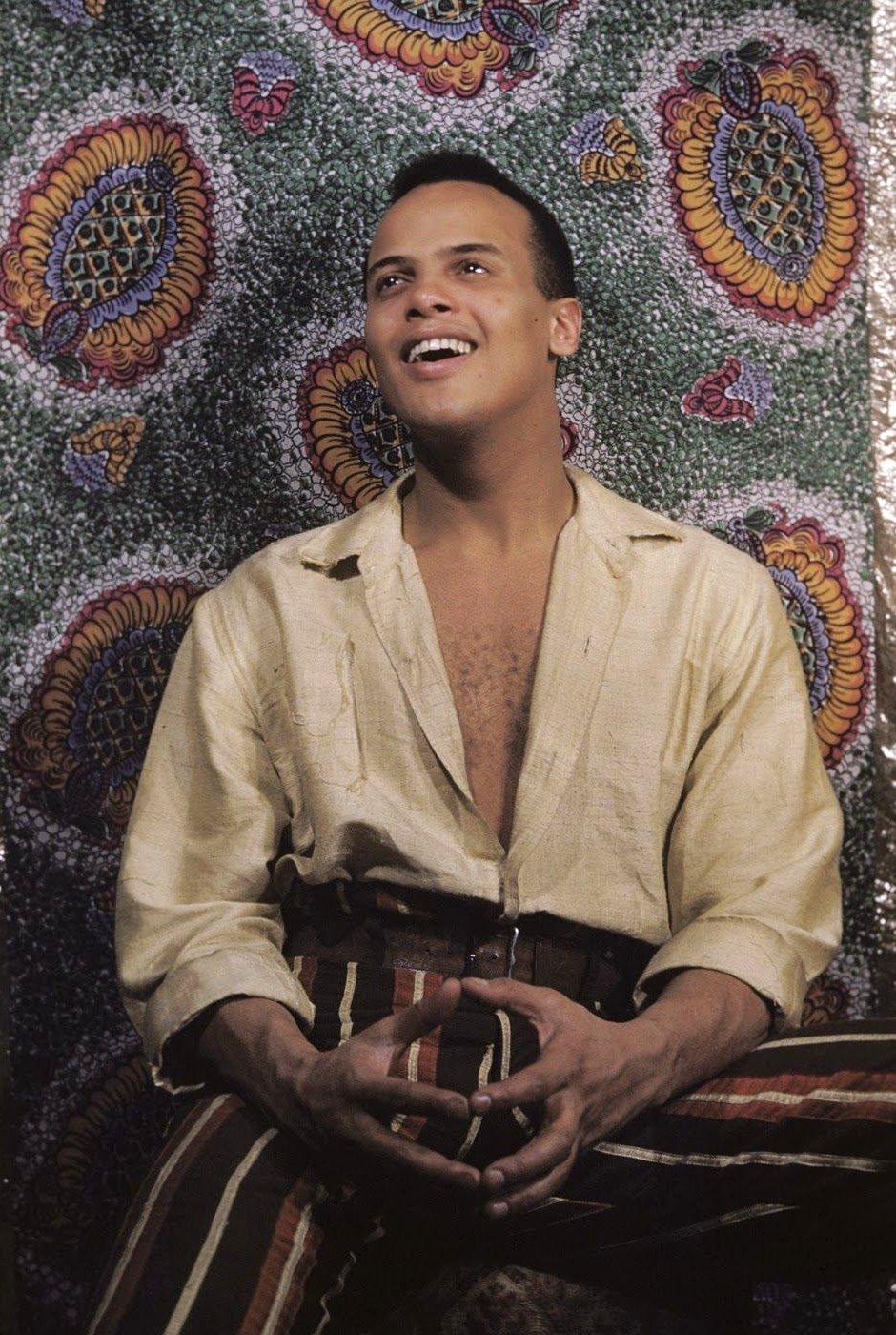
...and now that hunky young Calypso maestro (whose debut album was the first to sell millions across the globe), actor and showman extraordinaire, pioneer of the Civil Rights movement, and legend in his own lifetime, Mr Harry Belafonte has departed for his Island in the Sun for the final time, aged 98.

Facts:

  • He was mentored by Paul Robeson, and was a friend and confidante (and financial supporter) of Martin Luther King.
  • Appearing on Petula Clark's US television show, their arms touched in a loving way, which caused uproar from one of the show's bigoted sponsors - but "Our Pet" stood her ground, the show went out uncut, and Harry's career was given a massive boost.
  • He launched the careers Stateside of Miriam Makeeba, Nana Mouskouri and even Bob Dylan (who was Harry's harmonica player).
  • It was he who set the ball rolling for an American answer to Bob Geldof and Midge Ure's "Band Aid", gathering a wealth of talent on board for the fundraising single We Are the World in 1985.

RIP, Harry Belafonte (born Harold George Bellanfanti Jr, 1st March 1927 – 25th April 2023)

Thursday, 23 February 2023

A work of art!

Activists have poured yellow and blue paint on the road just outside the Russian embassy in London in a striking show of solidarity with Ukraine.

"Tomorrow is the first anniversary of Putin's imperialist invasion of Ukraine, an independent state and a people with every right to self-determination.

"The existence of a massive Ukrainian flag outside his embassy in London will serve to remind him of that." - Led By Donkeys campaign group

They should have been given medals, not arrested.

Tuesday, 25 January 2022

Furious Faggot


The incomparable and tireless champion of gay rights, civil rights and free speech, Patron Saint here at Dolores Delargo Towers, Mr Peter Tatchell is 70 years old today!

From his own Foundation's press release:

Peter Tatchell is one of Britain’s best known and longest surviving LGBT+ and human rights campaigners. He’s supported nearly every major human rights campaign for the last half a century – and taken on everyone from Mike Tyson to Tony Blair and the Archbishop of Canterbury.

He first began campaigning while still at school in 1967 aged 15, against the death penalty and the execution of Ronald Ryan in his home state of Victoria, Australia. He went on to champion indigenous Aboriginal rights and oppose Australia’s involvement in the Vietnam War. On moving to London in 1971, he was prominent in the newly-formed Gay Liberation Front and ... helped organise the UK’s first LGBT+ Pride parade in 1972 – this July being the 50th anniversary...

He stood as the Labour candidate in the notorious 1983 Bermondsey by-election – often regarded as the dirtiest, most violent and homophobic election in Britain since 1945. In 1990 he was a founding member of the LGBT+ campaign group OutRage! Its activism against homophobic discrimination included the most numerous and sustained direct action protests in Britain since the suffragettes.

Over the last five decades, he’s participated in 3,000 peaceful protests, been arrested 100 times and suffered 300 violent assaults by homophobes and far right extremists, including 50 attacks on his flat. He has described the violent assaults as like living through a low-level civil war. For many years he suffered from PTSD.

He was beaten unconscious by President Mugabe’s bodyguards when he tried to make a citizen’s arrest in Brussels in 2001 and suffered a severe beating by neo-Nazis in Moscow in 2007 when he supported the bid by Russian LGBTs to hold a Pride parade.

“My coordination, memory, balance, vision and concentration are somewhat impaired. Campaigning is more difficult but I still manage. I’ve no regrets. Compared to the jailing and torturing of human rights defenders in China, Russia, Syria and Uganda, I’ve got off lightly,” said Mr Tatchell.

All hail!

We would really love to see the recent film of the great man's life - co-produced (i.e. funded) by Sir Elton John and Peter Furnish, and featuring (among others) commentary and tributes from esteemed gayers such as Stephen Fry and Sir Ian "Serena" McKellen - Hating Peter Tatchell, but unfortunately it seems to have been snapped up by that behemoth Netflix, a service to which we stalwart BBC-ers would never subscribe, so I doubt we will get the opportunity for a while...

Regardless, we charge our glasses to a true hero!

Peter Gary Tatchell (born 25th January 1952)

Today also happens to be Burns' Night - yet another excuse for Scots to get pissed on whisky and eat pig guts - so what better way to pay tribute to Mr Tatchell's milestone birthday than with one of Scotland's finest bands and an appropriate choon?


OCH, AYE!


click to embiggen

Monday, 27 December 2021

Don't raise your voice, improve your argument

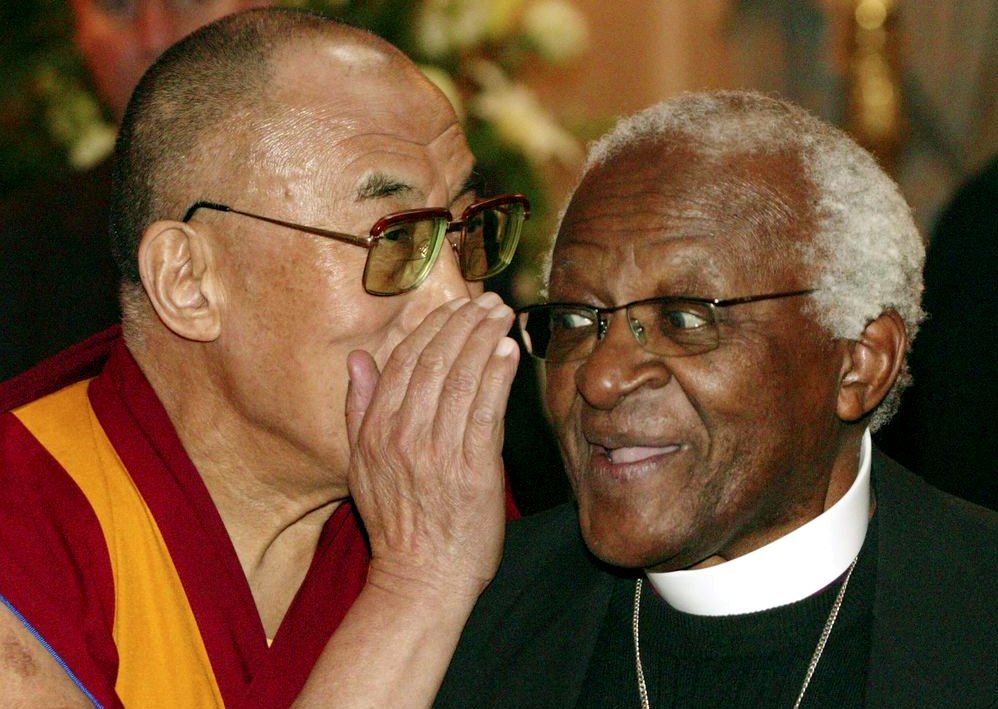
"If you are neutral in situations of injustice, you have chosen the side of the oppressor."

"Don't raise your voice, improve your argument."

"We may be surprised at the people we find in heaven. God has a soft spot for sinners. His standards are quite low."

"I would not worship a God who is homophobic and that is how deeply I feel about this. I would refuse to go to a homophobic heaven. No, I would say sorry, I mean I would much rather go to the other place. I am as passionate about this campaign as I ever was about apartheid. For me, it is at the same level."

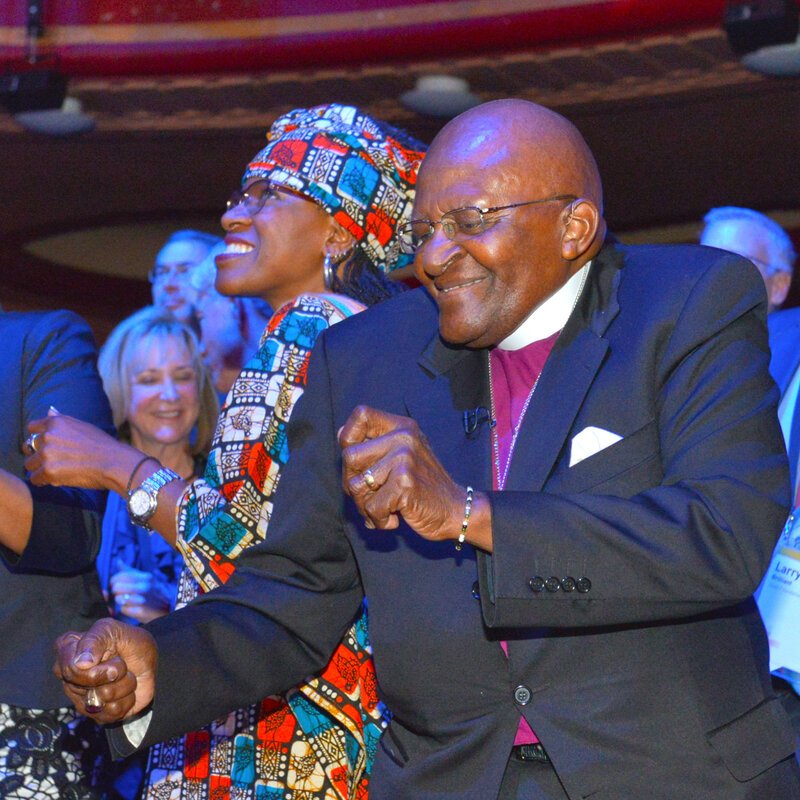
RIP, Most Reverend Archbishop Desmond Mpilo Tutu OMSG CH GCStJ (7th October 1931 – 26th December 2021)

Thursday, 11 June 2020

Great Scott!


Another day, another centenary - and another "Diva discovery"!

Miss Hazel Scott (for it is she) was a remarkable pioneer, it seems - a child prodigy at the piano, she was accepted into the Juilliard School of Music at the age of just eight; in her teens she played with the Count Basie Orchestra; by the 1940s she was earning more than $1 million [in today's money] a year and starring in otherwise all-white Hollywood musicals; and in 1950 she became the first black American to host her own TV show. Phew!

So why is she so forgotten? A lifelong civil rights campaigner (she refused to play segregated venues, and battled Hollywood over its portrayal of black people), unfortunately she became embroiled in the "McCarthy Witch-hunts" - which effectively destroyed her career, as it did to several prominent stars - and managed to get away from the flak by moving to France; only returning to the USA once the Civil Rights Act was enacted in the late '60s. She never recovered the prominence she had in her younger days, appearing in cabaret venues and occasionally on daytime TV.

Despite her importance, given current events, I can find absolutely no news coverage nor any mention of this momentous milestone out there on the interwebs. Which is a pity. Perhaps the BLM movement is too busy trying to pull down statues than to take a moment to commemorate [and maybe campaign for a statue to her?] the achievements of such an important woman in the history of the race equality struggle...

For our little celebration of a great lady, here's one of her remarkable screen performances:


Hazel Dorothy Scott (11th June 1920 – 2nd October 1981)

Wednesday, 17 May 2017

Freedom cannot be denied


To mark this year's International Day Against Homophobia (and Transphobia and "Biphobia"), I thought I would share with you the ever-incisive thoughts of our Patron Saint of Human Rights, Mr Peter Tatchell:

Queer freedom is an unstoppable global trend


The last few years have witnessed an unnerving backlash against lesbian, gay, bisexual, transgender and intersex (LGBTI) people in nearly 20 countries, including Russia, Morocco, Uganda, Iraq, Brunei, Syria, Nigeria and The Gambia.

This escalating repression has included more vigorous enforcement of long-standing laws criminalising same-sex relations; resulting in highly publicised arrests in countries such as Tunisia, Cameroon, India, Egypt and Senegal.

Prohibitions on same-sex relations

Seventy-three countries still have a total prohibition on same-sex relations. Half of them are members of the Commonwealth. Their homophobic laws were imposed by Britain in the nineteenth century, during the era of colonialism, and retained after independence.

The penalties for homosexuality include 25 years jail in Trinidad and Tobago and 20 years plus flogging in Malaysia. Several Commonwealth countries stipulate life imprisonment: India, Sierra Leone, Tanzania, Pakistan, Uganda, Bangladesh and Guyana.

There have also been new laws enacted in some countries, most excessively in Nigeria, which has outlawed LGBTI organisations, fundraising and public advocacy – and even banned gay-focused HIV prevention and LGBT-themed books and movies.

Lesser repression involves restrictions on media coverage of LGBTI issues and on the foreign funding of LGBTI groups, as happens in Uganda.

In these backlash countries, LGBTI people are increasingly demonised and scapegoated by demagogic politicians and fundamentalist clerics as a cheap way to win popular support.

At the start of 2016, a spokesperson for Malawi’s opposition party, Ken Msonda, sought to bolster his profile and win bigoted votes: “Arresting them (LGBTIs) won’t address this problem because sooner or later they are being released on bail. The best way to deal with this problem is to kill them!”

Anglican churches in Nigeria and Uganda have contributed to the witch-hunting atmosphere; supporting draconian new anti-gay laws.

Distracting from economic failings and corruption

To the delight of many governments, having an “enemy within” has conveniently distracted public attention from economic failings and corruption.

Hate rhetoric is fuelling homophobic mob violence – sometimes perpetrated by right-wing death squads – especially in Honduras, Brazil, Mexico, Peru and El Salvador. Over 200 Honduran LGBTI activists have been assassinated since 2008.

A disproportionately high number of victims of anti-LGBTI violence are transgender people. The Trans Murder Monitoring project reports that over 1,300 trans and gender-diverse women and men were murdered in Latin America from 2008 to 2014.

In recent years, the Indian and Singaporean courts have upheld the criminalisation of same-sex relations, and Burundi and Chad have outlawed homosexuality for the first time in their history.

Islamic State in Syria is targeting LGBTIs for execution, mostly by throwing them off tall buildings. In neighbouring Iraq, Shia militias are also waging a terror campaign against LGBTI people.

Despite this bleak picture, in the overwhelming majority of the world’s 193 countries, the trend is towards ever greater LGBTI acceptance and equality.

Greater LGBTI legal protections

In recent years, we’ve seen the decriminalisation of gay sex in Belize, Palau, São Tomé and Príncipe, Northern Cyprus, Mozambique, Nauru and the Seychelles.

There are legal challenges to the ban on same-sex relations in Jamaica and Trinidad and Tobago.

A Ugandan court annulled the notorious Anti-Homosexuality Act, albeit on a technicality. The new Bill to replace it has never been legislated.

Vietnam lifted the ban on same-sex marriage in 2015, as a prelude to its expected eventual legalisation.

The Botswana courts have for the first time recognised the right of an LGBTI organisation to be registered and the Indian Supreme Court has upheld the rights of the trans community.

Helem, Lebanon’s LGBTI group, has operated for over a decade; hosting the first LGBTI centre in the Arab world. Taiwan has elected its first woman president, a supporter of same-sex marriage, in a country where marriage equality now has more than two-thirds public support.

The first openly lesbian cabinet Minister has taken office in South Africa, while two men who were prosecuted for being gay in Zambia were acquitted at their trial.

Both the United Nations Human Rights Council and the African Commission on Human and People’s Rights passed resolutions in 2014 calling on governments to protect their LGBTI communities against discrimination and hate crime.

What the global public thinks

Research by the Williams Institute has found rising global acceptance of same-sex relations, including in many developing countries:

“Latin American acceptance of homosexuality ranges from a high of 34% in Uruguay to a low of 2% in Ecuador. On legal recognition for marriages for same-sex couples, Uruguay has the highest level of support at 57% while Guatemala has the lowest level of support at 12%. In Africa, acceptance of homosexuality ranges from a high of 38% in South Africa to a low of 2% in Ghana.”

These figures of support are still too low but nonetheless a big improvement on a decade ago.

In this context of majority progress, backlash is a minority blip in the overall worldwide trajectory towards LGBTI equality. It is a reaction to the positive gains won by brave, determined LGBTI human rights defenders, many of whom risk their liberty and lives. If we were not winning there’d be no backlash. Backlash is a dreadful but backhanded compliment.

LGBTI freedom has been long delayed but it cannot be denied.
There is, of course, a shorter message to anyone who dares to decry, discriminate, agitate or threaten violence against us. As is traditional on this day, we leave it to Lily Allen (and the GayClic Collab Against Homophobia) to say it.

Fuck You!:


Resources:

Sunday, 8 November 2015

Let's talk about sex, baby


"Millions of young people enter adulthood sexually and emotionally illiterate. Many subsequently endure disordered relationships, ranging from unfulfilling to outright abusive. The result? Much unhappiness – and sometimes mental and physical ill-health. The lack of effective - and statutory - sex and relationship education (SRE) in schools is part of the problem. It is mostly vague and euphemistic, with too little detail and not enough explicitness to be of practical benefit. Much of it concentrates on the biological facts of reproduction, often concerning other species such as rabbits. Very little teaching is actually about sex - or relationships. And it starts too late; usually after young people have become sexually active and adopted bad habits such as unsafe sex."
The annual address by the admirable gay rights campaigner Peter Tatchell to the LGBT Humanists (the artist formerly known as GALHA) - which I and Paul attended on Friday - took a distinctly critical look at the lamentable state of the British education system, when it comes down to educating the nation's kids about sex.

Nothing new here, I suppose - I assume that just about everyone in our cross-generational audience entered the weird and wonderful world of sexual discovery at best misinformed, at worst wracked with guilt, and essentially unprepared for "that moment" when the cherry gets popped. Sex "education" as far as I recall consisted of the Ladybird book "Your Body", playground gossip, the underpants pages of the Littlewoods catalogue, confusing medical diagrams, tabloid outrage, porn, and a red-faced and downright embarrassing ten-minute chat with a parent...

Mr Tatchell's proposals - and you can read them in full on the Teach Secondary educators' resource website - are sensible (if likely to set the pig-dogs at the Daily Mail frothing at the mouth with outrage), including frank discussion about matters of consent and enjoyment, safer sex and alternatives to penetration, difference and diversity (including gay and bisexual experiences), and (most important of all) accurate information about the "how, what, when, where and why" of sex and relationships.

It was another lively and thought-provoking evening that generated plenty of debate (despite the session being somewhat shorter than usual as Peter had to travel cross-country for another engagement) - and yet again served to prove that it takes someone like Mr Tatchell to say the things that people (particularly our benighted and under-educated political leaders) need to hear.

More power to the man!

For more information about the Peter Tatchell Foundation’s human rights work, to receive email bulletins or to make a donation, visit www.PeterTatchellFoundation.org.

Friday, 22 May 2015

With no blacks, no Jews and no gays


Today would have been the 85th birthday of the world-famous Harvey Milk, the (first in the US) out-gay public official in San Francisco who was assassinated in 1978.

By way of a little tribute to the "first modern-day gay martyr" (as some Americans would have it), and in recognition of our usual upbeat way to celebrate a weekend, I simply must play one of my favourite disco choons from that era - a time when Mr Milk represented what everyone thought may have been a new epoch of freedom for us gayers...

Produced by the genius that is August Darnell, who also gave us Dr. Buzzard's Original Savannah Band and Kid Creole and the Coconuts, here is Machine and There But For The Grace Of God Go I:


Carlos and Carmen Vidal just had a child
A lovely girl with a crooked smile
Now they gotta split 'cause the Bronx ain't fit
For a kid to grow up in
Let's find a place they say, somewhere far away
With no blacks, no Jews and no gays

There but for the grace of God, there go I
There but for the grace of God, there go I, I, I, I, I, I, I

Poppy and the family left the dirty streets
To find a quiet place overseas
And year after year the kid has to hear
The do's and don'ts and the dears
And when she's ten years old she digs that rock'n'roll
But Poppy bans it from the home

There but for the grace of God, there go I
There but for the grace of God, oh go I (could be me, could be you)
There but for the grace of God, oh go I, I, I, I, I, I, I

Baby, she turns out to be a natural freak
Gaining weight and losing sleep
And when she's sweet sixteen, she packs her things and leaves
With a man she met on the street
Carmen starts to bawl, bangs her head to the wall
Too much love is worse than none at all

There but for the grace of God, there go I
There but for the grace of God, oh go I
There but for the grace of God, oh go I, I, I, I, I, I, I


Thank Disco It's Friday!

RIP Harvey Bernard Milk (22nd May 1930 – 27th November 1978)

Read our previous tribute to Harvey Milk

Sunday, 11 January 2015

Thoughts for the day


“I do not agree with what you have to say, but I'll defend to the death your right to say it.”
- Voltaire

“Give me the liberty to know, to utter, and to argue freely according to conscience, above all liberties.”
- John Milton

“Most people do not really want others to have freedom of speech, they just want others to be given the freedom to say what they want to hear.”
- Mokokoma Mokhonoana

“Whoever would overthrow the liberty of a nation must begin by subduing the freeness of speech.”
- Benjamin Franklin

“My own opinion is enough for me, and I claim the right to have it defended against any consensus, any majority, anywhere, any place, any time. And anyone who disagrees with this can pick a number, get in line, and kiss my ass.”
- Christopher Hitchens

"No one has the right to live without being shocked. No one has the right to spend their life without being offended."
- Philip Pullman

“The moment you say that any idea system is sacred, whether it’s a religious belief system or a secular ideology, the moment you declare a set of ideas to be immune from criticism, satire, derision, or contempt, freedom of thought becomes impossible."
- Salman Rushdie

The million-strong "solidarity march" in Paris.

Saturday, 15 November 2014

All human beings everywhere


Paul, Jim and I proudly attended the annual "State of the Nation" (or in this case, "Nations") address by the formidable human rights and LGBT rights campaigner Peter Tatchell last night, on the subject Organised religion is the greatest global threat to human rights (another brilliant event hosted by the marvellous Gay & Lesbian Humanists (GALHA) at the Conway Hall).

Suffice to say, it was jaw-droppingly brilliant. No words of mine can do it justice. Thus I turn to Peter's own words to provide the gist of the almost two hour speech:
"Organised religion is the greatest global threat to human rights; especially to the human rights of women and gay people. It invariably promotes sexist and homophobic discrimination in law."

“The title of Organised Religion is a controversial claim, and you might say that free market capitalism is the greatest threat to human rights. It is debatable what is a greater threat, but I think it is organised religion that is the single greatest threat.”

"From the US and Russia to Uganda and Iran, religious fundamentalism is seeking to thwart equality and human rights. It is the cause of much sectarian violence, as we have seen in the Central African Republic, Nigeria, Pakistan, Burma, Somalia – and for many years in Northern Ireland. In Britain, our Anglican, Catholic, and Muslim leaders tried to block the right of same-sex couples to marry. Most faiths exclude women from senior leadership roles and some seek to deny them contraception, abortion and fertility treatment."

“Fundamentalists of all faiths threaten human freedom on many different levels. The Catholic Church is marginally less misogynistic and homophobic than Islamist extremists, but that’s about it.”

"Obviously, there are some people of faith, such as Archbishop Desmond Tutu, who are icons of human rights. Their humanitarian work is motivated by a good and positive religious ethos. But, for the most part, religious leaders around the world are the key orchestrators to attacks on human rights. This ranges from evangelical Christian leaders in the UK and the United States, the leader of the Russian Orthodox Church, orthodox Jewish leaders in Israel and Muslim clerics in many countries. It’s important that we support people in all faith groups, who are working for equality and human rights. It would be wrong to write off all religious people as colluding with persecution and oppression. From my own heart, I’ve been inspired by religious leaders such as Dr Martin Luther King and Archbishop Oscar Romero."

"Senior clerics are often those who are most hostile to women and gay rights. Yet only 5% of British Catholics actually support the Vatican’s opposition to contraception; 11% with the condemnation of homosexuality."

“Secularists support the separation of religion and the state. With no established state religion, there is equality for people of all faiths and none. Secularism is the best guarantor of religious freedom. It is in the interest of people of all faiths, as well as the interests of non-believers. People are entitled to their faith but they are not entitled to insist that their religious values are the law of the land.”

"All human beings everywhere have human rights and no political system or faith should be allowed to undermine them."
Powerful stuff, and not one word with which I would disagree. Here is a video of his recent lecture on the topic at the University of Exeter:


The Peter Tatchell Foundation (PTF) seeks to promote and protect the human rights of individuals, communities and nations, in the UK and internationally, in accordance with established national and international human rights law.

To join up, donate or get involved with Peter in support of this magnificent aim, visit the PTF website.

Thursday, 2 February 2012

"I had good legs. Some boys used to wolf-whistle me."


One of our heroes Peter Tatchell celebrated his 60th birthday last week! Heavens... Here is his article in Time Out marking the occasion, reprinted in full:
I've just marked my sixtieth birthday and I'm now celebrating 45 years of human rights campaigning and 10 years of my human rights organisation, the Peter Tatchell Foundation. It seems so unreal, so implausible. After all, nothing in my family background inclined or prepared me for a lifetime of LGBT and human rights activism.

I was born in Melbourne in 1952; growing up in a period of illiberal government and anti-communist witch-hunts. My parents were ultra-conservative evangelical Christians, similar to those depicted by Jeanette Winterson in her book, 'Oranges Are Not The Only Fruit'. On the positive side, they taught me to stand up for what is right and to not follow the crowd - a maxim I still live by.

My father, Gordon, worked in an engineering factory, as a lathe operator. Mardi, my mother, alternated between being a housewife and working in a biscuit factory. She had bouts of chronic, life-threatening asthma. There was no NHS in Australia in those days, so much of our family income went on medical bills. We were dirt poor. This hardship probably honed my passion for justice.

From the age of eight, whenever my mother was ill, I had to run the house and bring up my younger brother and sisters; cooking and washing when I got home from school. It restricted my play time with friends but made me independent and resourceful. Being born a few years after the end of the Second World War, many comics, books and films had war themes.

By the age of 11, I used to ask adults: 'Why did people allow Hitler to get power? Why didn't they stop him?' No one gave me a satisfactory answer. I vowed that if I ever saw tyranny and injustice I would not remain silent and do nothing. In 1963, I saw reports about the racist bombing of a black church in Birmingham, Alabama, which killed four young girls who were about my own age. I was stunned, horrified. It made me a life-long anti-racist. I was inspired by Dr Martin Luther King and the black civil rights movement.

My campaigning for human rights began in 1967, aged 15, when I protested against the hanging of an alleged killer, Ronald Ryan, despite doubtful, conflicting evidence. His execution destroyed my trust and confidence in the police, courts and government; resulting in a lifetime of scepticism towards authority. It opened my eyes to other injustices: the mistreatment of the indigenous Aboriginal people and the brutal war being waged against Vietnam by the US and Australian governments.

At school, I was rebel. I demanded and won the right of pupils to have a say in running the school. On July 4, 1968, we burnt the US flag in protest at the Vietnam War. I was not aware of my gayness.

I had good legs. Some boys used to wolf-whistle me. I was gently teased with jibes of 'poofter Pete'. It didn't upset me, because I was confident that I was straight. Besides, I was popular and well liked.


My fellow pupils voted me school captain in 1968. That year, aged 16, I had to leave school to get a job, to help the family income. My passion was art and design. I wanted to go into architecture but I had no qualifications. So I settled for design and display in a big department store. That's where I first met gay people and soon after realised I was gay.

I fell in love, aged 17. I read a report about gay protests in New York in late 1969 and immediately decided that I wanted to be part of the fight for gay liberation. Drawing lessons from the black civil-rights movement, I concluded that gay people were an oppressed minority just like black people - and that the black tactics of non-violent direct action and civil disobedience could be applied to the struggle for LGBT freedom.

Australia had conscription for Vietnam. I was not willing to fight an unjust war. The penalty for refusal was two years jail. So I skipped the country and came to London in 1971. Within five days I was at my first meeting of the newly formed Gay Liberation Front.

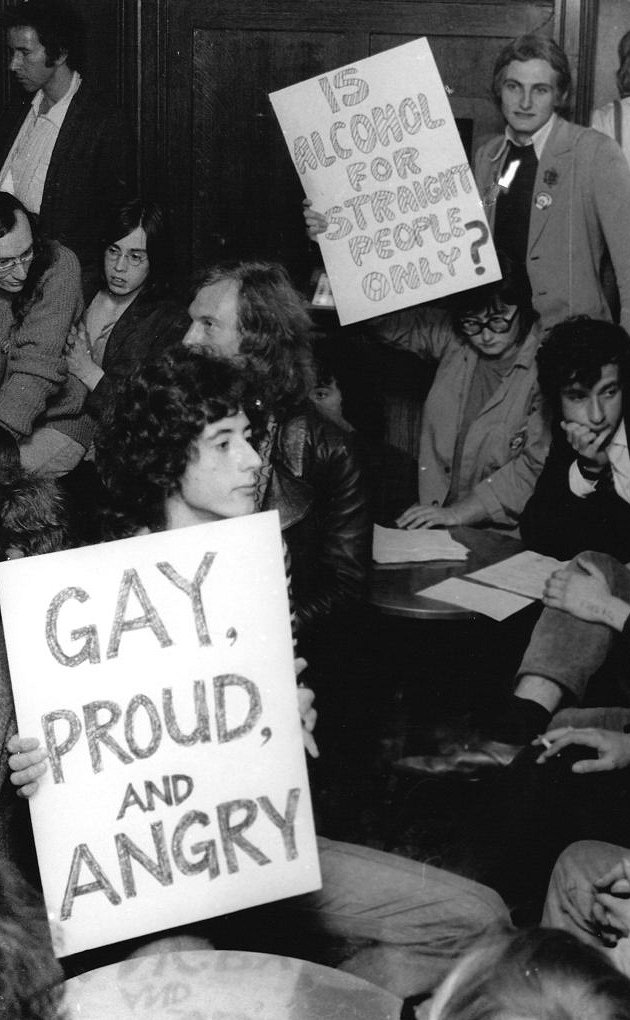
Modelled on the methods of the black civil-rights movement, I helped organise sit-ins at pubs that refused to serve 'queers'. We forced the pub owners to back down. Little did I imagine that 30 years later, in 2011, I'd be standing outside the John Snow pub in 'gay' Soho, protesting against the eviction of a gay couple for kissing. It just goes to show that the price of queer freedom is eternal vigilance.
What a man! And still looking good for his age...

Peter Tatchell Foundation

February is LGBT History Month.

Sunday, 18 September 2011

No religious exemptions!


John-John, Paul and I joined the “Secular Europe Campaign” in its protest march yesterday.


Praise be to the Invisible Stoat of Destiny!

About 1000 of us congregated at the Temple end of the Embankment, with a magnificent array of placards, flags and banners. We joined the Gay and Lesbian Humanist Association (GALHA) and many other like-minded groups to protest against:
  • the privileged status of the churches under Article 17 of the TFEU (Treaty on the Functioning of the European Union)
  • the privileged position of religious organisations in politics and the law
  • the special status of the Vatican in the United Nations
  • state-funded faith schools
  • the economic privilege and political influence of the Vatican

And to promote:
  • freedom of religion, freedom of conscience and freedom of speech
    women’s equality and reproductive rights
  • equal rights for LGBT people in all the European Union
  • a secular Europe – democratic, peaceful, open and just, immune to the clandestine influence of privileged religious (or other) organisations
  • one law for all, no religious exemptions from the law
  • state neutrality in matters of religion and belief


At the conclusion of the march - which was very jolly, and got lots of shouts and waves of approval from passers-by along the route - we had a succession of eminent speakers, including Peter Tatchell, the president of the National Secular Society Terry Sanderson and David Pollock, President of the European Humanist Federation.

Andrew Copson, Chief Executive of the British Humanists Association said:
"We are marching today for a secular Europe. Europe is the continent where secularism was invented, where liberal democracy first flowered, and Europe played a major part in developing the very concept of human rights and we should celebrate that today... What does it mean to live in a free and liberal secular democracy? It means if you don’t like abortion, you don’t have to have one. If you don’t like gay marriage, you don’t have to have one, or be a guest at one. If you don’t like assisted dying for the terminally ill, you don’t have to opt for it. But it also means that you can’t enlist the state to force your choices, preferences, prejudices and dogmas on all your fellow citizens."
Among the shocking revelations from the rally were the personal account of Sue Cox about her own childhood abuse at the hands of a Catholic priest and the church's subsequent cover-up of the facts, the ex-Muslim Maryam Namazie and her forthright views on Sharia law and the burka ("it is not just a piece of clothing - it is a symbol of man's ownership of a woman"), and the Italian campaigner who exposed the €3bn tax exemptions for the Vatican his country gives (and by implication, all EU countries contribute to).

Great stuff, and so important! I am very pleased I was there...


One of the more famous of the people lending their endorsement to the campaign was the award-winning author Philip Pullman:


More about the march and rally (including more pictures from the event)

Another report from the march

Tuesday, 26 May 2009

Nothing like a Dame


That magnificent dame of the theatre Serena (Sir Ian McKellen) celebrated his 70th birthday on Monday. He celebrated his night off from Waiting for Godot in style by taking 25 of his friends to La Cage aux Folles, where he acquired a lovely lipstick print on his forehead from one of the "Cagelles".

After the show he continued the festivities at a private birthday in the theatre with the cast, with stars Roger Allam and Philip Quast, and other friends including the wonderful Frances Barber, fab luvvie Simon Callow, and the gorgeous Paul Keating.


Happy birthday to a stalwart of theatre, and of gay rights! For it is another famous anniversary this summer - twenty years ago, the ground-breaking political lobby group Stonewall was founded (allegedly in a meeting in Serena's front room), and its successes are now legendary, not least with the estimable support of Sir Ian McKellen. A marvellous man!


Sir Ian McKellen

Sunday, 22 February 2009

Burst down those closet doors once and for all, and stand up and start to fight


"Somewhere in Des Moines or San Antonio, there is a young gay person who all of a sudden realises that she or he is gay. Knows that if the parents find out they’ll be tossed out of the house. The classmates will taunt the child and the Anita Bryants and John Briggs are doing their bit on TV, and that child has several options: staying in the closet, suicide... and then one day that child might open up the paper and it says, “Homosexual elected in San Francisco,” and there are two new options. One option is to go to California... OR stay in San Antonio and fight.

"You’ve got to elect gay people so that that young child and the thousands upon thousands like that child know that there’s hope for a better world. There’s hope for a better tomorrow."
Harvey Milk
As we await with predictable boredom the announcement of the Oscars tonight, with the inevitable feeling that the judges will go for the "safe option" in most of the categories, it will be interesting to see whether Milk gets any of the awards for which it has been nominated.

We are planning to go and see the film next week, so I cannot comment on how it works on screen, but the story of assassinated San Francisco politician Harvey Milk is (and should be) legendary.

Many years ago, I watched the documentary film The Times of Harvey Milk. I had not long come out when it was released, and the battles this heroic man undertook on his journey to election made a huge impact on me, in an era of Reaganite/Thatcherite politics and the looming backlash of tabloid opinion about gay people in the wake of AIDS.

Thirty years on from Milk's election and subsequent murder, and twenty years on from Reagan and Thatcher, the homophobia is still there - think of recent tabloid coverage of George Michael or Boy George (to name just the most prominent anti-gay reporting) - and in the recent US elections the euphoria over the election of a black President was clouded by the passing of homophobic laws in California, Florida and Arizona.

So this man's legacy remains vitally important today. And in a fascinating essay, written as an introduction to a book about his story, screenwriter and Oscar nominee Lance Black explains why we should never forget Harvey Milk.

If you read nothing else today, read this.

Harvey Milk's famous "Give them Hope" speech, read by Sir Ian McKellen:


Harvey Milk on Wikipedia

Tuesday, 20 January 2009

The caged bird sings


As the world's media goes into a frenzy over the inauguration of Barack Obama, and dear old Maya Angelou is wheeled out to give some pearls of wisdom (Read her Notes to a President on the BBC website), I feel it isn't my place go into the deeper significance of this momentous occasion. Many others will say it much better than I.

Suffice to say that the election of America's first black president is indeed a sea-change in the history of the so-called "Land of the Free". And this tiny example of the early career of Maya Angelou herself can only serve to illustrate the fact. For back in the 1950s, when Calypso music was a new craze, it is a little-known fact that Maya was a successful singer of that genre. I recently acquired her album Miss Calypso, and it is really good!

However, when it came to portraying this typically black style of music, what did Hollywood do? Why, produce a practically all-white film to celebrate it, of course... Shocking really, but it just goes to show how times have really changed:

Sunday, 28 December 2008

"Communications ready, sir. Communications officer as ready as she’ll ever be."


Celebrating today the birthday of Nichelle Nichols, better known as Lieutenant Uhura in Star Trek, there are a few things that we should know about this remarkable lady:
  • Not only was hers the first non-"servant" part for a black woman on mainstream American TV, but she shared the very first ever inter-racial kiss on TV when she and Captain Kirk had a little intimate moment.
  • Her great-grandfather, James Gillespie, was Welsh.
  • Nichelle always was, and still remains, a campaigner for civil rights - both those of black people and on behalf of gay and lesbian equality.
  • She was a "glamour model" before Star Trek brought fame and fortune, but was always an accomplished singer, performing with Duke Ellington and Dizzie Gillespie.
Here are some examples of her talents (including her [truly incredible] vocal version of the Theme from Star Trek)...


...and here, Miss Nichols speaks out on gay rights:


We love her.

Uhura official website

Thursday, 21 August 2008

RIP Leo Abse - a pioneer


"Leo had the satisfaction of outliving most of his enemies. He heroically challenged the accepted stereotypes of the companions of the ageing process.
His second marriage was to a young woman when he was in his eighties. He worked with the enthusiasm, energy and chutzpah of an enfant terrible until his final days."

Paul Flynn MP

And so farewell then Leo Abse, one of the most significant politicians in our history, who died this week.

Leo Abse was a backbench Labour MP for thirty-nine years, and an admired lawyer and author. He famously got more legislation on to the statute book than any other backbencher, and most important of all he was the man who drafted and championed the act that brought us the legalisation of homosexuality in the UK.

His achievements include not only the Homosexual Law Reform Bill in 1967, but the 1975 Children's Act, the Divorce Reform Act of 1969 (that for the first time allowed divorce on the grounds of breakdown of a marriage) and the ending of barristers' monopoly of the High Courts.

A dramatic, flamboyant and outspoken character, Leo was born into a family of Polish Jews who had settled in Wales (his grandfather was reputedly the first Jew to speak Welsh with a Yiddish accent and Yiddish with a Welsh one).

His clothes - designed by his first wife - were a welcome splash of colour in a world of the pinstripe suited, Eton-tie-wearing establishment of Westminster, and his extravagant fabrics and bouffant hair caught the attention of the media - in particular on Budget day, for which he reserved his most elaborate and eye-catching outfits.

Unabashed in his choice of topics on which he would write, in 2000 he published the wonderfully-titled Fellatio, Masochism, Politics and Love, apparently "an analysis of the repressed homosexual components of the relationship between Gordon Brown and Tony Blair"; and in 2006 The Bisexuality of Daniel Defoe: a psychoanalytic survey of the man and his works.

A pioneer - we owe Leo Abse a massive debt, and we should remember his achievements with pride.

Read his obituary in the Daily Telegraph

Sunday, 18 November 2007

Don’t mess with my Tutu!

"It is a perversion if you say to me that a person chooses to be homosexual. It's like saying you choose to be black in a race-infected society." Desmond Tutu


I love this man! South African Archbishop Desmond Tutu has called the Anglican Church and its leadership "homophobic" for its attitudes towards gay people in an interview with BBC Radio 4.

He said that the Church was "obsessed" with the issue of gay priests.

Read the article